What is a stereogram?
Updated
A stereogram is a flat image that hides a 3D picture. It looks like a repeating pattern or random noise until you look through it, as if at something behind the page. Then a shape or word rises out of the pattern with real depth.
Every weekly puzzle on The Week Eye is a stereogram that hides one word or shape. You find it, type it, and the server times your solve.
The three kinds of stereogram
- Stereo pairs: two photos side by side, one for each eye. The oldest kind, from Victorian stereoscopes to modern VR headsets.
- Autostereograms: a single image whose pattern repeats with small shifts. Your two eyes fuse neighboring repeats, and the shifts become depth. No glasses or viewer needed. Also called single-image stereograms.
- Random-dot stereograms: an autostereogram built from random dots instead of a picture texture. The hidden shape has no outline at all in the flat image, which makes it the purest test of 3D vision. The puzzles here use this style with themed colors.
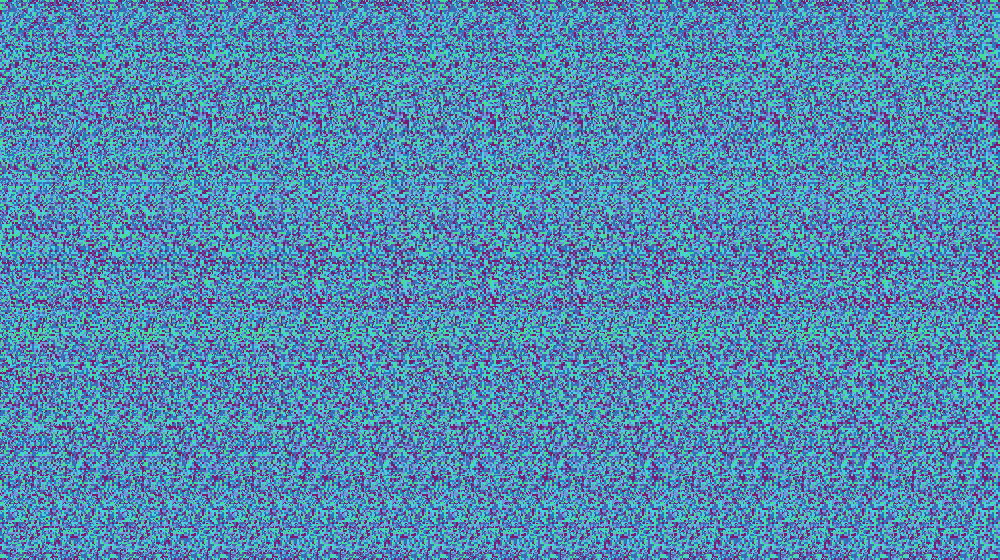
A practice image from the lessons: a big square floats in front. Look until the two dots above become three.
A short history
In 1838 Charles Wheatstone described stereoscopic vision and built the first stereoscope, a mirror device that showed each eye its own drawing. In 1844 David Brewster noticed that repeating wallpaper patterns can appear to float at a different depth when your eyes lock onto the wrong repeat. That "wallpaper effect" is the principle every autostereogram uses.
In 1959, Bela Julesz at Bell Labs created random-dot stereograms on a computer to show that depth perception happens in the brain, after the eyes, with no visible shape needed. In 1979, Christopher Tyler and Maureen Clarke combined the two ideas into the single-image random-dot stereogram. In 1994, Harold Thimbleby, Stuart Inglis and Ian Witten published the linked-pixel algorithm that removed most artifacts; this site's generator is built on it.
In the early 1990s, single-image stereogram posters and books became a mass-market craze, with whole mall kiosks of hidden 3D pictures. The Week Eye brings that idea back as a weekly game with a clock and a leaderboard.
Why they are fun as a puzzle
A stereogram hides its answer from your normal reading vision and shows it only to your 3D vision. That makes it a fair, unusual puzzle: no trivia, no vocabulary tricks, just your eyes. Some weeks hide a word; some hide a shape; harder weeks use shallower depth and tilted answers.
Questions
What is a stereogram?
A stereogram is an image that hides a 3D picture. When you look through it with relaxed eyes, each eye locks onto a slightly different part of a repeating pattern and your brain reads the difference as depth.
What is an autostereogram?
An autostereogram is a single-image stereogram: one picture, no glasses and no viewer. Most hidden 3D posters and every puzzle on this site are autostereograms.
What is a random-dot stereogram?
A random-dot stereogram hides its shape in a field of random dots. Nothing is visible until your eyes fuse the pattern, so the shape cannot be seen any other way.
Do I need special glasses?
No. Autostereograms work with bare eyes. Glasses you already wear for reading or distance should stay on.
Try it now
This week's puzzle hides a new word or shape. The clock starts when you press Start.